Resultados para: «then»
606 resultados
¿Quisiste decir
tren?

Contenido
· Ficha de clase
La mochila de Teddy Bear
Then, you will look for that object on the images and ask the question: “What is it?” or “What are they?”
Ver contenido
Contenido
· Ficha de clase
Preguntando por los objetos del aula
The other person selects a card and you must guess the card they have selected, asking the questions: what color is it?
Ver contenido
Contenido
· Ficha de clase
Ayudemos a Pedro
If the question is how many, then the answer is a number.
Ver contenido
Contenido
· Ficha de clase
Comunicándonos entre viñetas
Ésta se llamó, The yellow kid, es decir, El niño amarillo.
Ver contenido
Contenido
· Ficha de clase
El arte, una herramienta para la paz
Wall”, y hasta la banda de punk Sex Pistols, con “Holidays in the Sun”.
Ver contenido
Contenido
· Secuencias
RA1. On the telephone
On the telephone
Ver contenido
Contenido
· Secuencias
WA1. At the library
At the library
Ver contenido
Contenido
· Ficha de clase
Abstracción de un texto: valoramos los conceptos
La llamaron así por la canción de los Beatles “Lucy in the Sky with Diamonds” (Lucy en el cielo con diamantes), que escuchaban
Ver contenido
Contenido
· Ficha de clase
Abstracción de un texto: valoramos los conceptos
La llamaron así por la canción de los Beatles “Lucy in the Sky with Diamonds” (Lucy en el cielo con diamantes), que escuchaban
Ver contenido
recurso
· Video
Do Bengal tigers live in the forest? = ¿Los tigres de Bengala viven en el bosque?
Do Bengal tigers live in the forest? = ¿Los tigres de Bengala viven en el bosque?
Ver recurso
recurso
· Video
Does she like to cook? = ¿Le gusta cocinar?
Descubrirás que cuando utilizamos: I, we, you o they, se usa el auxiliar: do, don´t.
Ver recurso
recurso
· Video
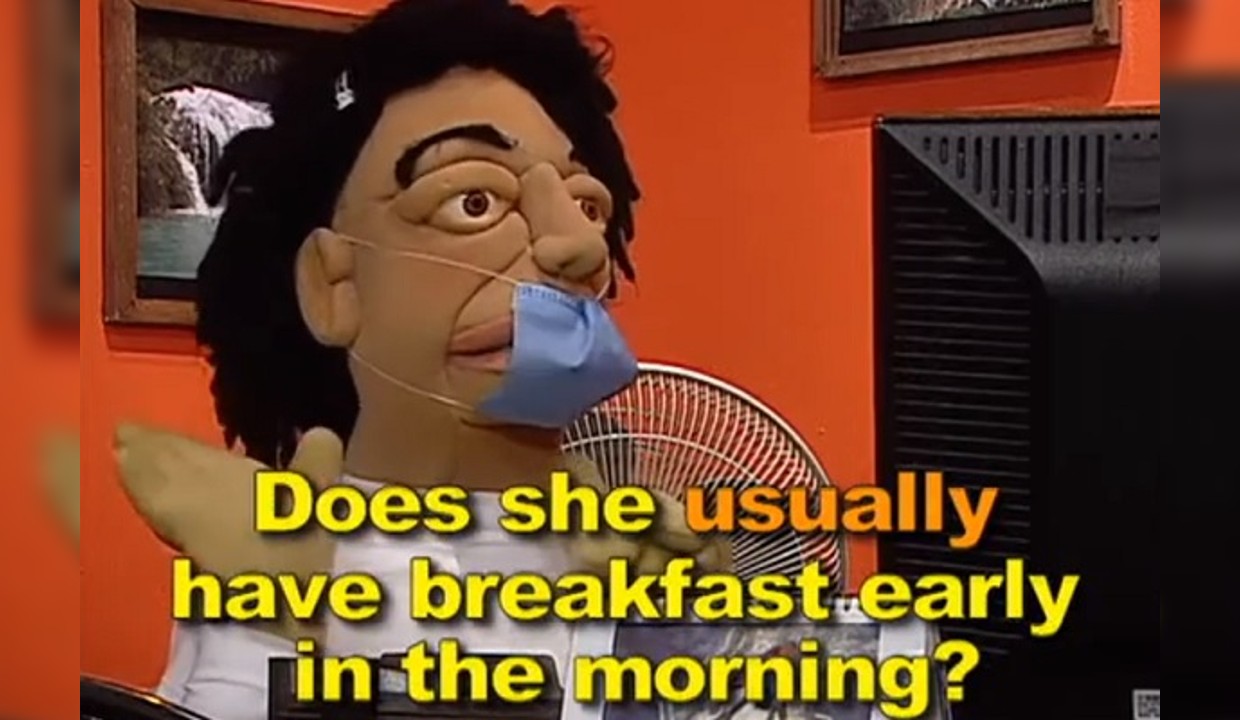
Does she usually have breakfast at 8 o'clock? = ¿Por lo general ella desayuna a las 8 en punto?
Por ejemplo: I never listen to classical music / Do you usually watch TV in the afternoon?
Ver recurso
recurso
· Video
Does your father like soccer? = ¿A tu papá le gusta el fútbol?
En preguntas, respuestas cortas y oraciones negativas, por ejemplo: Does he like to protect the environment?
Ver recurso
recurso
· Video
Getting ready for the party = Preparándose para la fiesta
Getting ready for the party = Preparándose para la fiesta
Ver recurso

recurso
· Video
Irregular verbs in the past tense
Irregular verbs in the past tense
Ver recurso